

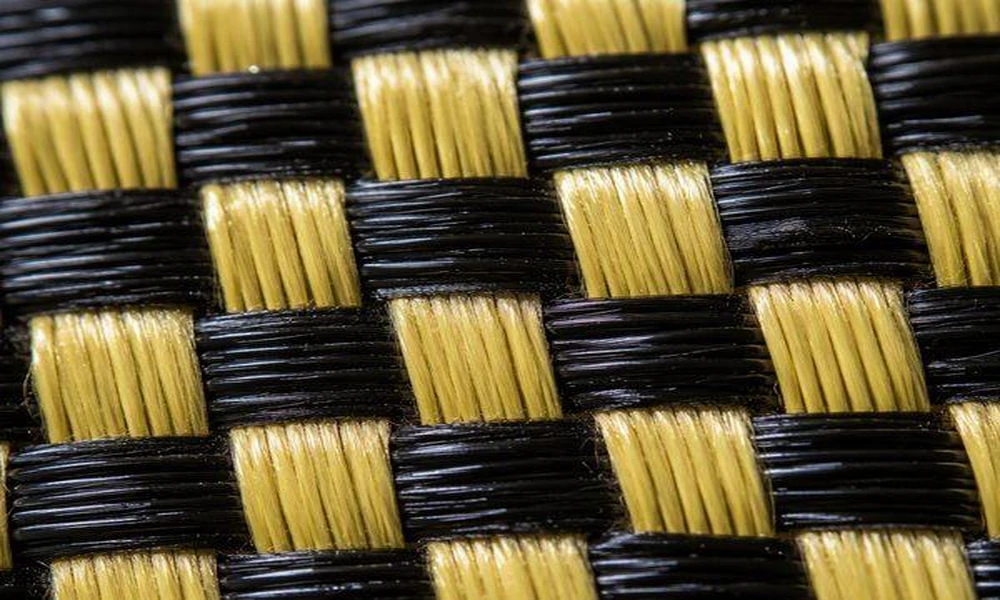
Carbon Kevlar hybrid fabric. Black carbon threads interwoven with golden aramid.
Ordering composite parts used to be simple. You picked carbon fiber, picked a weave, and that was the end of the conversation. Then the black-and-gold hybrid weave showed up, and suddenly there is a real decision to make. Carbon, Kevlar, or carbon Kevlar, the hybrid of the two?
The right answer depends less on the material and more on your honest answers to a few questions. Here are the eight we would ask before spending a dollar.
1. What is trying to damage this part?
A rear wing faces air pressure and nothing else. A front splitter faces air pressure plus curbs, gravel, and the occasional parking block. The first part wants stiffness, which is carbon fiber’s home turf. The second wants impact tolerance, which is where aramid fibers earn their keep. Name the enemy before you name the material.
2. Will the part see repeated hits or one big load?
Kevlar stretches two to four percent before it breaks, roughly double what carbon manages. That stretch is what lets it survive the tenth gravel strike as well as the first. Carbon is the opposite: superb under steady load, unforgiving under sudden ones. Repeated small impacts argue for Kevlar or a hybrid. Steady aero load argues for carbon.
3. Does the part carry compression?
This one surprises people. Kevlar is famous for tensile strength, but under compression it holds only about 20 to 30 percent of that capacity. Anything that works like a strut, a brace, or a load-bearing panel still belongs in carbon fiber.
4. Will it live in sunlight?
Raw aramid fiber degrades under UV exposure. On a painted or clear-coated part this is a solved problem, but on a part where the weave stays visible, the gold fibers need a quality UV-stable clear coat. Ask your supplier what coating they use, not just what weave.
5. Who is trimming and finishing the part?
Kevlar frays when you cut it. Edges and drilled holes in aramid parts need diamond tooling and patience, and sloppy finishing shows immediately. A shop that has never trimmed aramid will produce fuzzy edges. This is one of those details that separates a good hybrid part from a frustrating one.
6. What does failure look like for you?
Carbon fails suddenly: a crack, sometimes hidden delamination you discover weeks later. Kevlar fails gradually: it dents, stretches, and shows you the damage. If you race endurance events or drive gravel roads far from home, visible gradual damage is worth real money. This carbon Kevlar vs carbon fiber breakdown has the test numbers behind that difference.
7. What is your real budget, per season, not per part?
Raw Kevlar fiber costs more than standard carbon: roughly $15 to 25 per pound against $10 to 20. Hybrid parts add a further premium because two fiber types mean slower, more careful layup work. But one hybrid splitter that survives a season beats two carbon splitters that do not. Count replacements, shipping, and downtime, not just the invoice.
A Note on Pure Kevlar Parts
You will notice that almost nothing on the market is pure Kevlar bodywork, and now you know why: it flexes too much for panels and carries compression poorly. Where pure aramid does appear is underneath the car, skid plates, undertrays, rally protection, where stiffness is irrelevant and stone strikes are constant. If your build includes that kind of use, a pure aramid undertray is one of the few genuinely buy-it-for-life parts in the car world.
8. How much do looks matter?
Be honest. The black-and-gold weave is striking, and for some builds that is half the point. If appearance ranks high on your list, it is also worth looking at forged carbon fiber, which takes a totally different visual approach. There is no wrong answer here, only an unexamined one.
How to Read a Supplier’s Answers
Ask these questions and listen as much to how they are answered as to what is said. A serious composite shop answers with specifics: resin systems, cure methods, which sections of a bumper get aramid and which stay carbon. A reseller guessing at their own catalog answers with adjectives. ‘High quality’ is not an answer. ‘We use a UV-stable automotive clear coat and diamond tooling on aramid edges’ is. The suppliers worth your money enjoy these questions, because they are the questions that separate them from the competition.
Putting It Together
Most builds end up mixed: carbon where stiffness rules, hybrid where impact lives, and pure Kevlar almost nowhere on its own because of the compression weakness. If you are also weighing carbon against metals for structural pieces, this carbon fiber vs aluminum data guide covers that side of the decision.
Answer the eight questions honestly and the material choice stops being a gamble. It becomes a spec.
