

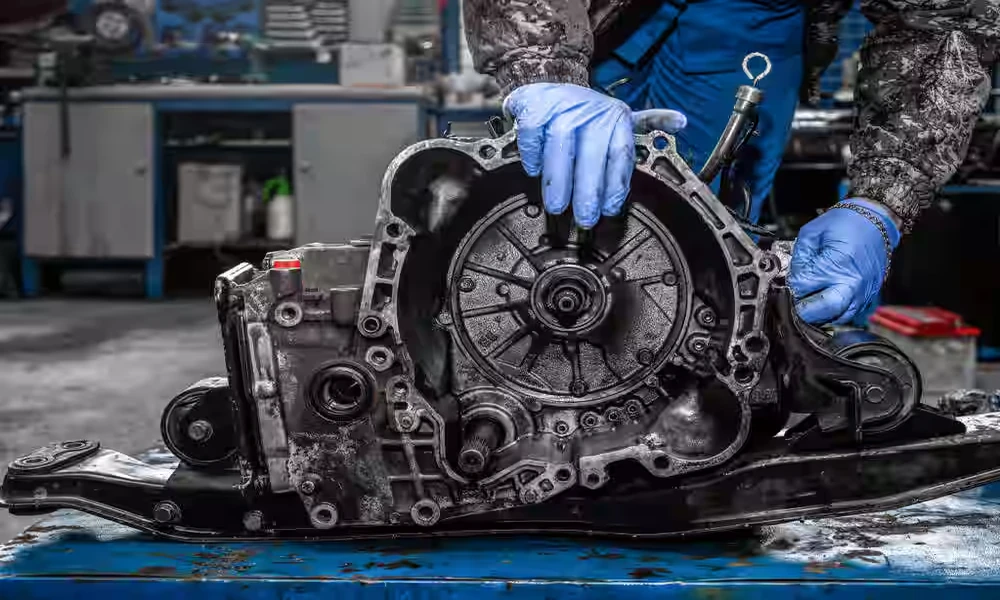
Transmissions are where general workshops most often reach the limits of what they do well, and where the cost of a wrong diagnosis is highest. The same symptom can mean a fluid service, a solenoid, a valve body, a mechatronic unit or a full rebuild, and those outcomes differ by an order of magnitude in price. Choosing a Gearbox Specialist rather than a general garage matters because the diagnosis, not the repair, is the expensive part to get wrong.
Why Specialisation Genuinely Matters Here
Modern transmissions are hydraulic, mechanical and electronic systems operating together, and reading a fault code tells you which circuit reported a problem rather than which component failed. Distinguishing a failing solenoid from a worn clutch pack, or a valve body issue from a torque converter fault, requires equipment and pattern recognition built from seeing many units. A workshop that rebuilds transmissions weekly reaches conclusions a generalist reaches by elimination, and elimination is funded by the customer.
Ask What They Actually Do In-House
There is a meaningful difference between a workshop that removes your transmission and sends it elsewhere, and one that opens and rebuilds units on its own premises. Neither is wrong, but you should know which you are dealing with, because it affects accountability, turnaround and cost. Ask directly whether rebuilds are done in-house, who performs them, and how long they have been doing it. Ask how many units of your particular type they see in a year.
Diagnostic Capability Before Anything Else
The first question is how they will establish what is wrong. A proper diagnostic process includes reading fault codes and live data rather than codes alone, checking fluid condition and level correctly, which on many sealed units requires a specific procedure and temperature, a road test with the technician driving to reproduce the symptom, and pressure testing where indicated. A workshop that quotes for a rebuild before doing any of this is guessing at your expense.
Know Which Type You Have
Transmissions are not interchangeable in their failure modes. A conventional torque converter automatic, a continuously variable transmission, a dual-clutch unit and a manual gearbox each fail differently and each demands different expertise and equipment. CVTs in particular require specific fluid and are unforgiving of the wrong specification. Dual-clutch units have mechatronic assemblies that can be repaired separately from the transmission itself. Ask specifically about experience with your type rather than transmissions generally.
Get the Options Laid Out
For most faults there are several routes: a service, a targeted component repair, a rebuild of your existing unit, or a replacement with a reconditioned or used unit. A specialist should present all of them with prices and expected outcomes rather than defaulting to the largest. Where a used unit is proposed, ask what is known about its history and what warranty applies, since an unknown transmission carries unknown risk. Established transmission specialists are usually candid about which option they would choose in your position.
Understand the Quotation
A rebuild quotation should name what is replaced as standard, which components are inspected and reused if serviceable, whether the torque converter is replaced or reconditioned, whether the valve body is overhauled, and what happens if opening the unit reveals damage beyond the quoted scope, which is common. It should also state whether the cooler is flushed, because debris left in a transmission cooler will circulate back into a freshly rebuilt unit and undo it.
Turnaround, Loan Cars and Downtime
A transmission rebuild takes the vehicle off the road for days rather than hours, and for a household with one car or a business with a working vehicle that matters as much as the price. Ask for a realistic timeline including how long parts take to arrive, since some components for less common units are ordered rather than stocked. Ask whether a courtesy vehicle is available and on what terms. Ask what happens if the unit is opened and additional parts are needed, because that is where a five-day job becomes a two-week one. A specialist who gives you a range with the reasons behind it is being more useful than one who gives you a single optimistic date.
Warranty Terms Deserve Scrutiny
Ask what the warranty covers, for how long and how many kilometres, whether it includes labour to remove and refit the unit or only the parts, and what voids it. Terms requiring servicing at defined intervals are reasonable; terms so restrictive that any real-world use breaches them are not. Ask how many rebuilds come back under warranty. A specialist confident in their work usually answers that question directly.
Signals Worth Taking Seriously
Positive signs include a workshop that road tests before quoting, explains the diagnosis with reference to evidence, distinguishes between what they know and what they suspect, and offers a staged approach where appropriate. Warning signs include a rebuild quoted over the phone from a symptom description, pressure to decide immediately, reluctance to explain the diagnostic basis, and a refusal to put the scope in writing.
Making the Decision
Get two opinions for anything involving a rebuild, describe the symptom identically to both, and compare the diagnostic reasoning rather than the price. Ask each what they would do if the car were theirs. Ask for references or examples of similar units they have rebuilt. Assessed on diagnostic process, in-house capability, transparency of scope and warranty terms, a competent Gearbox Specialist is identifiable within two conversations, and the difference between one and a general workshop taking a view is measured in thousands.
